|
Login Register
Technology Products Sizing Tool Demonstrations FAQ Cart Order Now
Electrical Cabinet Fire Protection

Aerosol Fire Suppression
Self-Activating.
Maintenance-Free for 10 Years.

Aerosol fire suppression that mounts like a circuit breaker. No pipes. No tanks. No annual recharge. Just reliable protection exactly where fire starts.

<3s
Discharge time
10yr
Maintenance-free
100g/m³
Suppression density
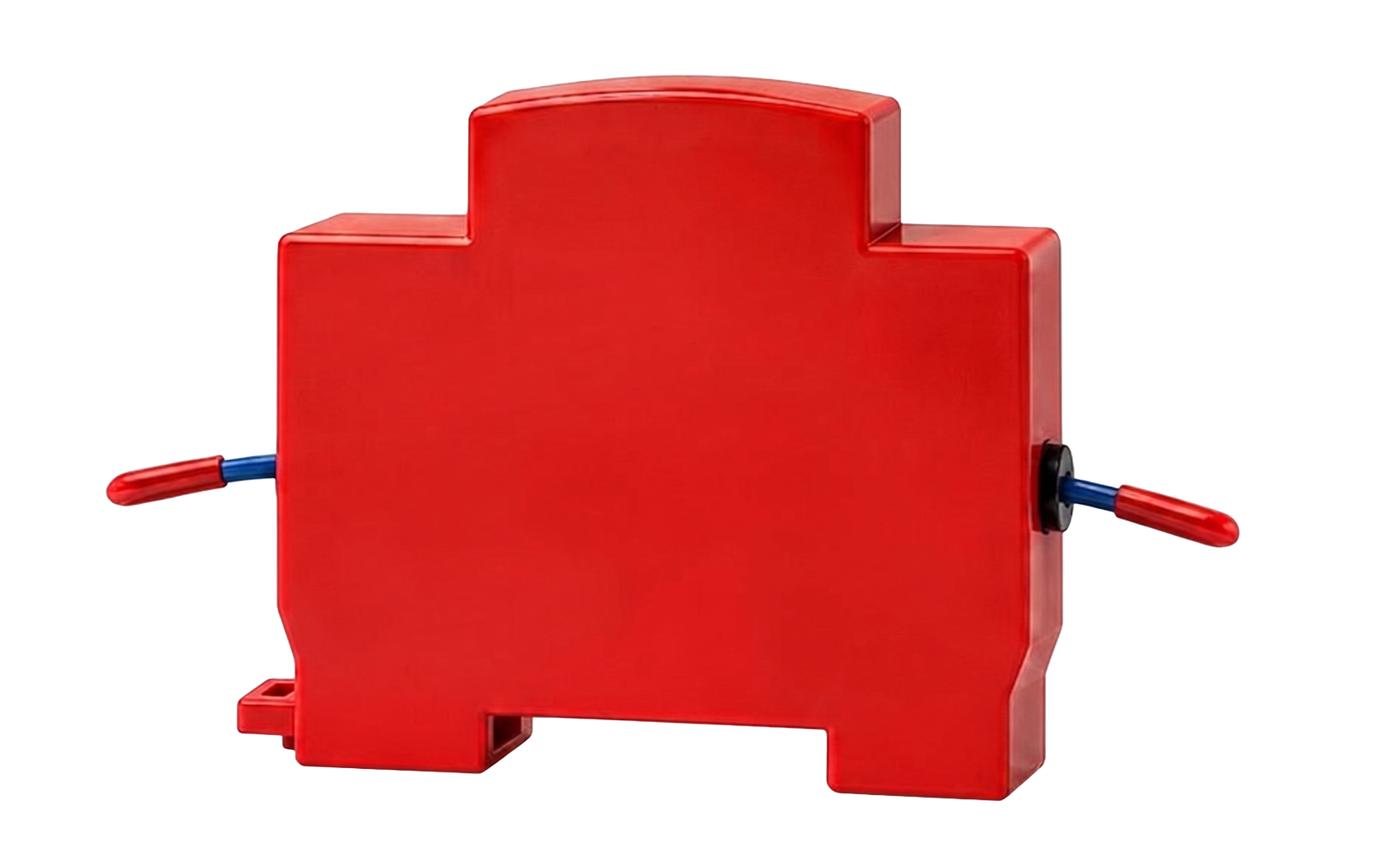
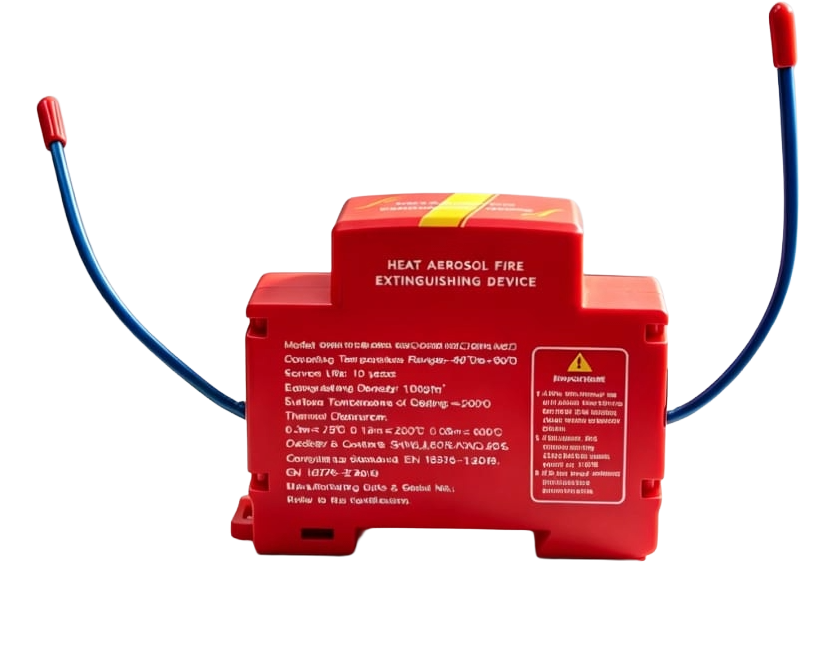
QRR0.02G/S 20g DIN rail aerosol fire suppression unit QRR0.02G/S — 20g agent, DIN rail clip
Model QRR0.02G/S
Agent 20g ±1g
Coverage Up to 0.2 m³
Mount DIN rail
Temp −40°C to +70°C
Service 10 years
DIN rail snap-in
−40°C to +70°C
Zero ODP / GWP
QRR 0.01G CSI AEROSOL 20g ±1g ISO 15779 QRR0.02G/S — 20g agent, DIN clip
Technology

Three-phase
aerosol fire suppression

Unlike CO₂ or water systems, aerosol attacks fire at the molecular level — no oxygen displacement, no collateral water damage.

01

Chemical inhibition

Ultra-fine potassium particles (0.1–10 microns) intercept combustion free radicals — H•, OH•, O• — terminating the chain reaction at the molecular level. Oxygen remains above 18%; safe for personnel.

02

Physical cooling

Endothermic decomposition absorbs thermal energy from the flame zone, pulling local temperatures below ignition thresholds of common insulation materials (300–400°C).

03

Flame dilution

Dense particulate cloud creates a physical barrier separating fuel from oxidizer, providing secondary suppression through flame structure disruption — all within 3 seconds of activation.

Comparison

Why aerosol fire suppression wins
in electrical enclosures

Swipe to view details
Criterion
CSI Aerosol
CO₂
Dry Chem
Water
Electrical safety
✓ Non-conductive
✓ Safe
✗ Conductive residue
✗ Highly conductive
Residue impact
Minimal fine dust
None
Heavy corrosive powder
Water damage
Installation
DIN rail clip-on
Piping required
Moderate
Complex wet system
Activation speed
< 3 seconds
10–30 sec
5–15 sec
30–60 sec
Service life
10 years
Annual inspection
6–12 months
Quarterly testing
Environmental
Zero ODP/GWP
High GWP
Moderate ODP
None
Available Products

CSI Product Catalog

Available DIN Rail aerosol fire protection products. Member bonus points can be earned based on purchase multiples.

Each unit has a 10-year service life · No routine maintenance · Complies with ISO 15779 / NFPA 2010.

Sizing Tool

Calculate 20g units
in under a minute

Enter your enclosure dimensions and conditions. The calculator estimates required agent mass and the number of 20g units needed.

Length (m)
Width (m)
Height (m)

Enter dimensions above to
estimate 20g unit quantity.

Recommended Quantity

Gross volume
Net volume (after deduction)
K₁ × K₂ factor
Required agent mass
Total 20g capacity
Safety margin
Order 20g Units Now →
Installation

Mount in minutes,
protect for a decade

1

Confirm DIN rail availability

Verify 35mm DIN rail (EN 60715 profile). Position the unit in the upper third of the enclosure for optimal downward aerosol dispersion.

2

Snap onto rail

Same clip mechanism as a circuit breaker. Verify 500mm clearance in front of the discharge nozzle.

3

Route thermal cord

Lay 1.5m heat-sensitive cable in a serpentine pattern covering all cable bundles and connection points. Secure every 150–200mm. Avoid bends >90°.

4

Optional: electrical integration

Connect 12–24VDC signal from fire alarm panel for remote activation. Dry contact output available for SCADA/BMS status monitoring.

Clearance requirements
Nozzle → personnel access ≥ 1,500 mm Thermal safety during activation
Nozzle → protected equipment ≥ 300 mm Prevents thermal shock to components
Nozzle clearance (unobstructed) ≥ 500 mm Ensures proper aerosol dispersion
Side / rear clearances ≥ 50 mm Airflow for thermal management
Activation methods
🌡
Thermal cord — autonomous, 170°C ±5°C, no power required
Electrical — 12–24VDC from fire alarm panel
🔴
Manual — break-glass or push-button emergency release
Demonstrations

Product Video Demos

Watch the CSI QRR aerosol fire suppression system in action. See how it detects, activates, and extinguishes fires within seconds.

Electrical Panel Fire Test

Actual demonstration of extinguishing a fire inside a closed switchgear panel.

Electrical Panel Fire Test

Electrical Panel Fire Test

Actual demonstration of extinguishing a fire inside a closed switchgear panel.

System Discharge Demo

System Discharge Demo

Close-up look at the rapid aerosol activation and volumetric flooding behavior.

Thermal Cord Activation Test

Thermal Cord Activation Test

Testing the autonomous activation of the thermal cord at 170°C without power.

Aerosol vs Traditional Systems

Aerosol vs Traditional Systems

Comparison of aerosol agent efficiency against CO2, water, and dry chemicals.

Step-by-Step Installation Guide

Step-by-Step Installation Guide

Complete walk-through showing how to mount the unit and route the thermal cord.

FAQ

Aerosol Fire Suppression FAQ
Common questions answered

Can it be used in occupied electrical rooms?
Yes. Aerosol maintains oxygen above 18% — unlike CO₂ which depletes it to dangerous levels. Pair with pre-discharge alarms and proper evacuation protocols per ISO 15779.
What maintenance is required?
Monthly visual inspection of the pressure indicator and thermal cord. Quarterly electrical circuit test if installed. Annual professional inspection. No annual recharge — ever. Replace at 10 years or after any activation.
What happens to equipment after discharge?
A light white/grey potassium carbonate dust settles on surfaces. It's non-conductive when dry, neutral pH — no corrosion. Vacuum with HEPA filter, wipe sensitive electronics with isopropyl alcohol, verify insulation resistance, then re-energize.
Can multiple units connect to one fire alarm panel?
Yes — parallel activation (single relay triggers all), zone-selective (separate detection zones per unit), or hybrid (thermal cord + remote electrical). Input: 12–24VDC, 3–5W momentary. Dry contact SPDT output for monitoring.
How do I account for leakage in ventilated panels?
Apply K₂ factor: sealed cabinet = 1.0, standard panel with small gaps = 1.1–1.2, louvers/perforated panels = 1.3–1.5. Heavily ventilated panels may not be suitable — consult CSI engineering.
What if my enclosure volume changes over time?
Size for the maximum anticipated configuration. For larger enclosures, use multiple 20g units distributed near likely ignition points for better coverage and easier expansion.
Get Started

Protect your
electrical infrastructure today.

Free volume calculation support, CAD integration, and compliance documentation for NFPA 2010, UL 2775, and ISO 15779.

Order Now Sizing Tool